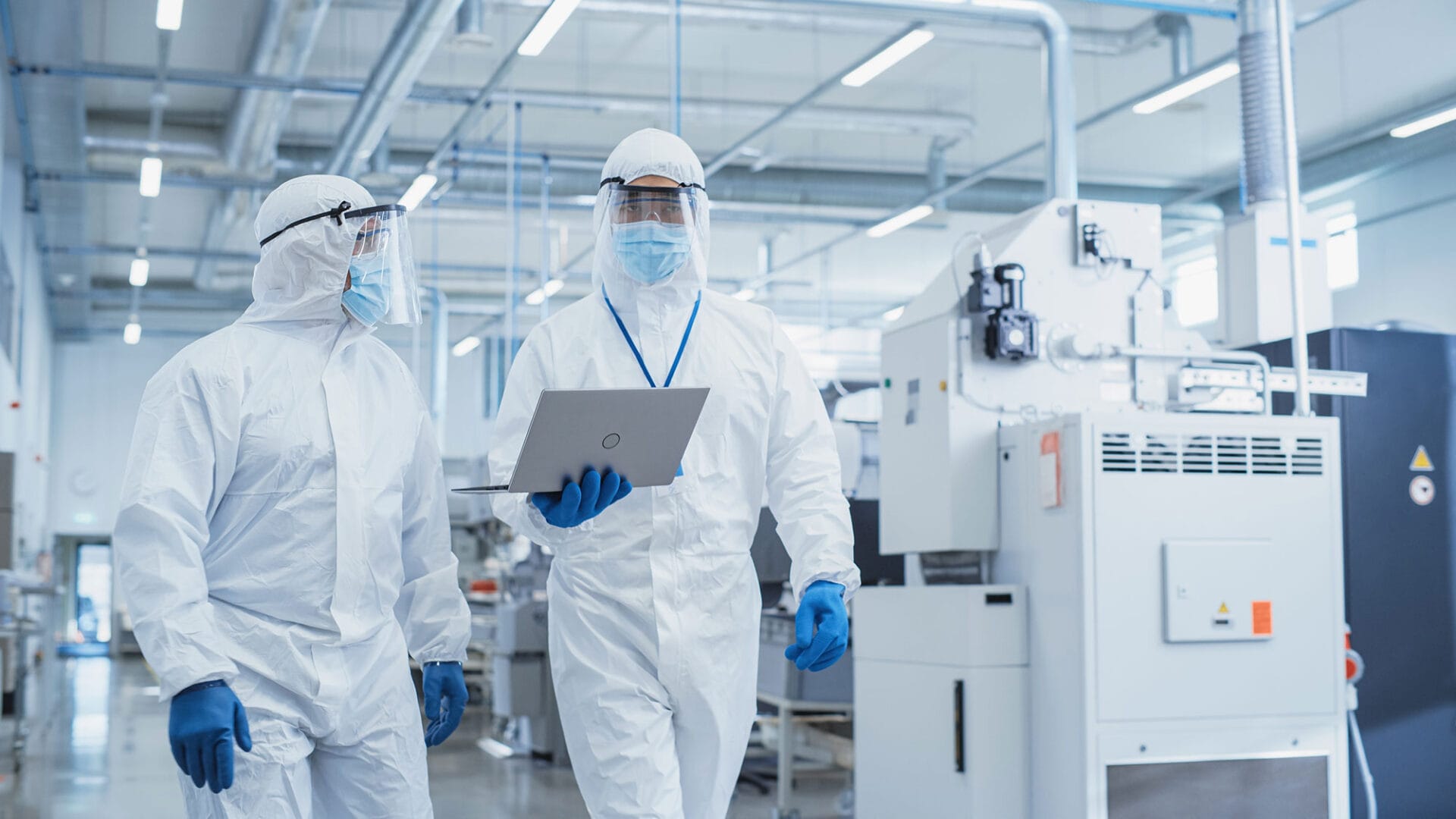
Improve manufacturing effectiveness, shorten cycle times and increase capacity without compromising validated processes, product quality or patient safety.
Pharmaceutical manufacturers must regionalise supply chains, adapt to increasingly complex modalities and bring products to market quickly while maintaining quality, compliance and reliable supply. Once processes are validated across multiple markets, change can become costly and slow, allowing weak process yield, long analytical release times and recurring deviations to persist. The challenge is to build robust processes and workforce capability that improve performance without increasing regulatory risk.
Validation is non-negotiable, but the perceived risk of change can make established processes feel untouchable even when inefficiency, unnecessary complexity or capacity constraints are evident. Pressure during commercialisation and scale-up can also lock in manufacturing inefficiencies that remain throughout the product lifecycle because later changes require approval across multiple markets.
Controlled process optimisation can simplify work, reduce variation and improve manufacturing effectiveness while protecting product quality, compliance and patient safety.
Deviation investigations consume time and resources, extend analytical release lead times and increase the risk of product loss. When investigations close the immediate requirement without identifying the true root cause, the same problems return.
Teams then spend valuable time revisiting familiar issues instead of strengthening process and analytical robustness.
Regionalised supply chains and new manufacturing locations can improve resilience, but they also introduce new operational demands. Reactive planning, process instability and compliance issues can contribute to market shortages and place greater pressure on product allocation.
Reliable supply depends on robust manufacturing processes that can respond to changing demand and consistently deliver the right products at the right time.
Digital technology, data systems and AI cannot compensate for unstable or inefficient processes. Without clear operational foundations, significant investment can add complexity without improving manufacturing effectiveness.
Digital transformation creates greater value when technology addresses a defined operational need and supports a process that is already understood and controlled.
Pharmaceutical manufacturing depends on specialist technical knowledge and effective leadership. Employee turnover, competing priorities and limited internal capacity can make it difficult to release people for improvement activity or capability development.
Without systematic learning and coaching, knowledge remains concentrated in individuals and continuous improvement struggles to extend beyond isolated teams.
We work with leaders and the people closest to the work to understand flow, capacity, quality, process yield and decision-making across manufacturing and support functions.
This creates a clear baseline and focuses performance improvement on the outcomes that matter, from shorter cycle times and more reliable analytical release to increased capacity and stronger supply reliability.
We apply Lean principles to improve efficiency while simplifying quality systems and processes. This can include reducing recurring deviations and making investigation and CAPA processes more effective.
Clearer processes help teams maintain control, identify true root causes and improve performance without adding further procedures, duplication or review.
We help ensure digital and data systems are applied to defined operational needs and supported by robust processes.
Improving the process before introducing technology prevents organisations from automating waste. Digital tools can then strengthen visibility, decision-making and control while delivering measurable operational value.
Leadership development, coaching and practical workplace learning help leaders set clearer priorities, make performance visible and create the psychological safety people need to raise and solve problems.
We build internal capability, not dependency. Knowledge becomes embedded in management systems and everyday work so your people can sustain and extend improvement after our engagement ends.
Lasting improvement depends on systems that connect organisational priorities with everyday work. We help establish visual performance management, clear accountability and structured problem-solving so teams can identify issues earlier, respond consistently and maintain progress as priorities, products and people change.
Whether excellence means improving supply reliability, reducing recurring deviations, increasing capacity or strengthening process robustness, we can help you turn that ambition into measurable improvement your people can sustain.